Hook: From Digital Gold to Liquid Champagne
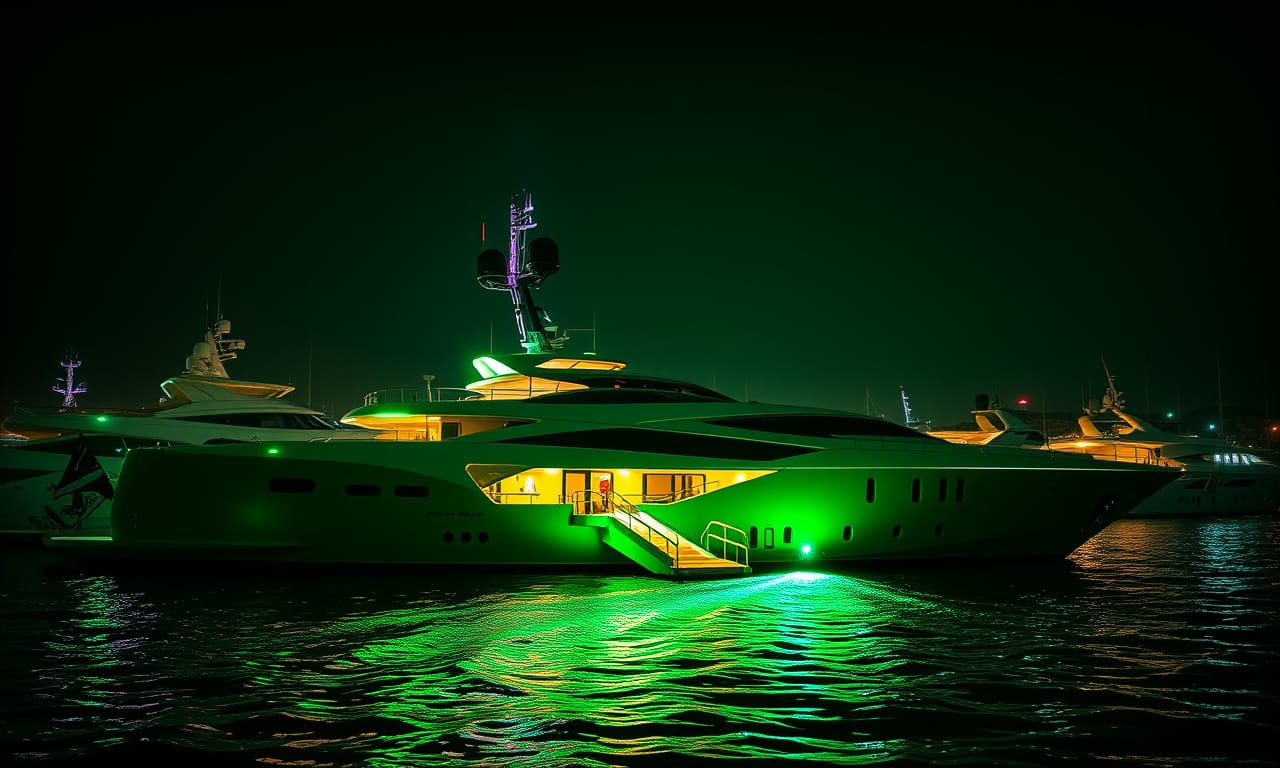
You think Bitcoin is about 'banking the unbanked'? About 'sovereign digital money'? About 'decentralizing the global financial system'? Wake up and smell the Dom Pérignon sprayed on the teak deck. The real, filthy, beautiful truth is that Satoshi's invention has become the world's most efficient offshore bank account for the already-loaded. Forget the Lambos - that's peasant talk. We're in the big leagues now, where digital fortunes scraped from the mines of Proof-of-Work are laundered through Monaco shipyards and converted into tangible, depreciating assets that float and party. This is the untold story of how the ultra-wealthy are using bitcoin to fund their yacht upgrades and Cannes trips. It's not a theory. It's a transaction log.
The Facts: The OTC Desk to Ocean Pathway
Let's get technical, because the mechanics are everything. Your average crypto bro selling a Bitcoin for a graphics card does it on Coinbase. That's the kiddie pool. The whale moving 500 BTC to buy a new helicopter pad for his 80-meter Amels does it through a private, invite-only Over-The-Counter (OTC) desk. These aren't exchanges - they're discreet chat windows on Signal, brokered by guys in Zurich with silent partners in Singapore. The process is surgically clean: Whale signals intent to sell a large chunk of BTC (or more likely, a derivative product collateralized by it). OTC desk finds a counterparty - maybe a hedge fund, a corporation treasury, an ETF issuer hungry for inventory. The trade is executed off-exchange, meaning no massive sell order hits the public order book to crater the price. Price stability is maintained. The illusion of HODL continues for the masses.
The fiat - clean, wire-transferred euros or dollars - lands in a purpose-built LLC, often in the British Virgin Islands or Malta. From there, it's a short hop to the yacht broker's account. The purchase isn't 'Bitcoin bought this yacht.' Legally, it's 'Maritime Holdings LLC purchased the vessel.' The blockchain ledger shows a transfer to an unknown wallet. The ship registry shows a new owner. The connection is a ghost in the machine, visible only to those who know the plumbing. The upgrade? A 'zero-knowledge proof' of wealth. The shipyard in Viareggio gets a wire transfer, not a crypto wallet address. They install the new submarine garage, the ice-class hull reinforcement for Arctic trips, the extra helipad. The Bitcoin has been transmuted into steel, fiberglass, and exclusivity.
The Cannes trip funding is even more elegant. It's not about buying festival tickets with crypto. It's about leveraging the asset. Whale takes his BTC, deposits it into a decentralized finance (DeFi) protocol on Ethereum or a private lending desk. He borrows a massive stablecoin loan against it at a 50% Loan-to-Value ratio. Why sell and trigger taxes when you can borrow against your appreciating asset? The stablecoins are swapped for euros. Voila - a multi-million-euro liquidity injection for a summer of villa rentals, private chef contracts, charter fees for the aforementioned yacht, and absurdly overpriced rosé - all funded by a loan against a digital asset that continues to (theoretically) moon in the background. The Bitcoin never moves. It just sits there, collateralizing the party.
Market Impact: What Happens to Our Bags?
So, does this yacht-and-champagne extraction bleed the market dry? The answer is frustratingly nuanced. The OTC selling exerts a subtle, constant downward pressure - it's supply hitting the market, just through a back door. It's like a slow leak in a tire. You don't notice it immediately, but eventually, the pressure drops. This activity often ramps up during market peaks or periods of high volatility, when whales look to crystalize gains into 'real world' trophies. It's a leading indicator of distribution from strong hands to... well, to shipbuilders.
For Bitcoin (BTC) itself, this is a natural, if cynical, maturation. It becomes a premier collateral asset for the global elite. This creates a floor of demand - not ideological demand, but utility demand. They need to hold it to borrow against it. This can be bullish in a perverse way. For Ethereum (ETH), the DeFi lending angle is pure rocket fuel. The more this activity happens, the more ETH gets locked up as gas fee burn and in protocol contracts. It validates the 'ultra-sound money' and 'financial ecosystem' narratives, even if that ecosystem's premier product is a loan for a party.
For altcoins? Forget it. The ultra-wealthy aren't selling Dogwifhat bags to re-caulk their Jacuzzis. They might have speculative plays in a separate, risk-off portfolio, but the serious wealth - the kind that moves markets and buys assets - is in Bitcoin, and to a lesser extent, Ethereum. The alts are the casino floor. Bitcoin is the high-roller room where the chips get turned in for cash. When whales cash out for luxury, our altcoin bags might stagnate or dip as liquidity gets pulled up the food chain. It's trickle-down economics, but in reverse - the wealth trickles up and gets spent on Italian craftsmanship.
Whale Watch: What Is Smart Money Doing?
Don't confuse 'smart money' with 'ethical money' or 'ideological money.' Smart money is amoral. Right now, chain analytics show the smartest whales are doing two things in tandem: 1) Accumulating BTC during dips via sophisticated accumulation bots and direct OTC purchases from mining companies, and 2) Simultaneously setting up lines of credit against their holdings for lifestyle expenditures. They are not selling their core position. They are leveraging it. They are turning their Bitcoin stack into a productive asset that generates fiat liquidity, while maintaining 100% exposure to the upside.
They are also diversifying into real-world assets (RWAs) on-chain - tokenized treasury bills, private credit funds. But crucially, they use crypto-native wealth as the entry ticket. The playbook is: Make generational wealth in crypto -> Use it as collateral to live a fiat-based luxury life without selling -> Park excess capital in stable, yield-bearing RWAs on the blockchain you helped build. It's a closed loop. The yacht is just the most visible symptom. Watch the wallet addresses linked to known venture capital funds and early miners. You'll see large, static holdings. Then, watch for the smaller, constant outflows to fiat-off-ramping services and known DeFi borrowing protocols. That's the money moving from the digital realm to the physical one. That's the funding for the fuel, the crew, the caviar.
The FUD Check: Noise or Signal?
Is this just decadent gossip, or a critical market signal? It's a deafening signal. This behavior is the ultimate stress test for Bitcoin's 'store of value' narrative. If the wealthiest holders are consistently using it as a piggy bank for luxury goods - goods that famously depreciate the second they're bought - what does that say about their long-term conviction? It says they see it as a tool, not a religion. This is healthy, in a way. It's a sign of financial utility. The FUD would be if they were selling everything and going to cash. They're not. They're monetizing their position, which is what any rational asset holder does.
The noise is the moralizing. 'They should be using it to build schools!' Cry me a river. This is the raw, unfiltered truth of capital. It seeks efficiency, privacy, and pleasure. Bitcoin provides historically efficient and private capital mobility. The pleasure part is a human constant. The real signal is in the scale and method. The fact that this is happening seamlessly through OTC desks and DeFi, without breaking the public market, shows an institutional-grade infrastructure has matured. That's bullish for adoption, even if the adoption use-case makes you want to vomit into your beanbag chair. This is the reality of how the ultra-wealthy are using bitcoin to fund their yacht upgrades and Cannes trips. It's not FUD. It's a fact pattern.
Conclusion: The New Gilded (Block) Chain
So here's the final verdict, served neat with a side of cynicism. Bitcoin has won. But not in the way the cypherpunks dreamed. It has won as the premier, borderless, high-liquidity collateral asset for the global elite. The dream of digital gold for the masses got co-opted by the old-world desire for physical gold-plated faucets on a megayacht. The revolution will not be decentralized; it will be comfortably seated on the sundeck, sipping a mojito paid for by a liquid loan against a non-liquidating collateralized debt position.
This isn't a condemnation - it's an observation. The technology is neutral. The human desire to flaunt, to enjoy, to separate oneself from the herd, is eternal. Bitcoin didn't create that desire. It just built a better, faster, more private bank to fund it. The next time you see a glossy magazine spread of a crypto billionaire on his new toy, remember: you're not looking at a sell signal. You're looking at a utilization report. The network is working as designed. Value is being transferred, permissionlessly. It just happens to be transferred to a French shipyard and a Swiss watchmaker. The ultimate irony? This very activity - the conversion of cryptic internet money into blatant, unignorable real-world status symbols - is the best marketing Bitcoin could ever have. It fuels the dream for the next million bag-holders. And the cycle continues. The waves lap against the new hull, the blockchain ticks forward, and the secret of how the ultra-wealthy are using bitcoin to fund their yacht upgrades and Cannes trips gets written, not in a manifesto, but in stainless steel and hangover memories.