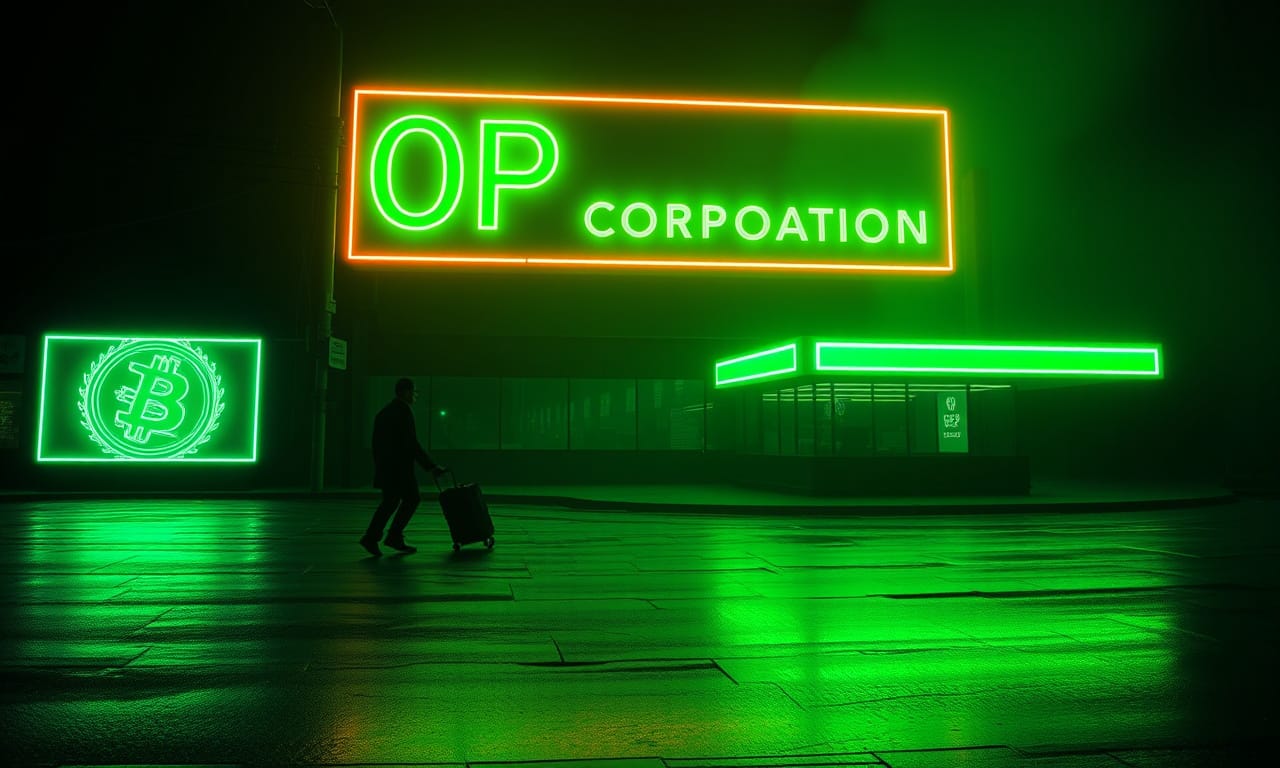
So Optimism Decided to Become a Bank
Let me get this straight. We spent years screaming about decentralization, about unstoppable code, about a world beyond the grubby mitts of central bankers and corporate boardrooms. And what does Optimism do? It holds a governance vote--because of course it did--and decides the pinnacle of crypto innovation is... a share buyback program. I need a drink. Optimism governance approves OP token buyback plan tied to superchain revenue. Read that again. It sounds like a headline from the Wall Street Journal, not the crypto-anarchist manifesto we were all promised. They've swapped the hoodie for a suit, and the punchline is we're all buying it.
The Facts: The Corporate Playbook, On-Chain
Alright, let's peel back the marketing-speak and see what this Frankenstein's monster of a proposal actually does. The Optimism Collective, which sounds more like a dystopian tech co-op every day, passed Proposal #RPGF-002. The core of it? A mechanism where a portion of the revenue generated by the 'Superchain'--that's Optimism's burgeoning ecosystem of Layer 2 chains like Base, Zora, and the rest--gets funneled into buying back OP tokens from the open market.
Here's the technical deep dive, minus the hopium. The Superchain's sequencer, the thing that batches and orders transactions, earns revenue. Think of it as fees. A slice of those fees, determined by future governance votes (so, completely opaque and changeable), will be automatically converted into OP. This isn't some vague promise. The code for this is being baked into the 'Protocol Guild' treasury, making it programmatic, predictable, and, frankly, a bit boring. It's a dividend, dressed in crypto drag. They've created a tokenomic feedback loop where ecosystem success theoretically increases token demand. The keyword there is 'theoretically.' Optimism governance approves OP token buyback plan tied to superchain revenue, but tying a token to the success of apps built on it is like tying a company's stock price directly to the GDP of the country it operates in. It's a broad, diluted, and easily gamed metric.
Market Impact: Will Your Bags Get Heavier?
What does this mean for your OP stashes, your ETH positions, and the wider altcoin casino? Let's get cynical.
OP Token: Short term? Price pumps on the news. It's a classic 'number go up' catalyst. Traders love a buyback narrative--it screams 'undervalued' and 'value accrual.' But long term? This introduces a new, persistent buy-side pressure. If the Superchain actually prints money (fee revenue), that pressure is real. If it doesn't, it's a fancy paper mechanism. The risk is this turns OP into a 'value' token, not a 'governance' or 'utility' token. It becomes a bet on Optimism Inc.'s profitability. Is that why you got into crypto?
ETH (The King): Bullish, but subtly. More Superchain activity means more batches settled on Ethereum, burning more ETH. It's another tiny, incremental demand sink for the motherchain. Don't expect fireworks, but it's a nod in the right direction.
The Altcoin Sphere: Here's where it gets interesting. Every other Layer 2 team--Arbitrum, Starknet, zkSync--is now taking furious notes. This sets a precedent. Token buybacks backed by protocol revenue will become the new 'must-have' tokenomic gimmick. Expect a wave of copycat proposals. It legitimizes a more traditional financial model within crypto, for better or worse.
Whale Watch: Where's the Smart Money Swimming?
You don't listen to what they say, you watch what they do. On-chain data in the 48 hours post-proposal shows two distinct patterns. First, a noticeable decrease in OP transfers from known venture capital wallets (the ones that got the fat airdrops) to exchanges. They're holding. That's signal number one--the insiders aren't dumping this news. Second, there's been an uptick in OP being moved into staking contracts and the governance module itself. Whales are parking tokens, likely to a) earn any potential staking rewards tied to this new system and b) increase their voting power for the inevitable follow-up proposals that will decide the actual revenue percentage. They're playing the long, corporate game. They're not trading the news; they're fortifying their positions on the board of directors.
The FUD Check: Genius or Gaslighting?
Let's separate the signal from the soul-crushing noise.
- The Signal: This is a serious, mature attempt to create tangible, non-speculative value for a governance token. It directly links ecosystem health to token mechanics. It's a bold experiment in on-chain corporate finance. Optimism governance approves OP token buyback plan tied to superchain revenue, and that linkage is a real, codified thing.
- The Noise (and the FUD): This is the final, sad capitulation to financialization. It reduces a piece of revolutionary tech to a stock ticker. It centralizes importance on the core Optimism team's ability to 'sell' the Superchain to other projects. What if Base decides to fork and leave? What if revenue is meager? The buyback becomes a trickle. Furthermore, it turns token holders into shareholders, demanding 'returns' over 'innovation.' It incentivizes the Collective to prioritize fee extraction over user experience or decentralization. This isn't Web3; it's Web2.5 with a blockchain backend.
The biggest piece of FUD? It assumes perpetual growth. It's the infinite growth model of traditional finance, imported directly onto the blockchain. We've seen how that movie ends.
Conclusion: The Verdict from the Cynical Trenches
So here's the final take, straight from the gut. Optimism governance approves OP token buyback plan tied to superchain revenue, and in doing so, they've made a definitive choice. They've chosen the path of the corporation over the collective, of shareholder value over revolutionary potential. Is it smart from a token price perspective? Probably. It gives crypto degens a familiar narrative to cling to--profits, dividends, buybacks. It's a language VCs and institutional bag-holders understand.
But it feels like a betrayal. It's the moment the punk band signs to a major label, fires the original drummer, and starts making music for car commercials. The tech is still brilliant. The Superchain vision is powerful. But the soul of the thing? It's being quantified, financialized, and packaged. Your OP tokens aren't a stake in a new digital frontier anymore. They're a share in Optimism LLC. Whether that makes you want to buy more or sell it all depends on why you got into this game in the first place. For the traders? This is a masterstroke. For the true believers? Pass the whiskey. The future is here, and it's wearing a tie.