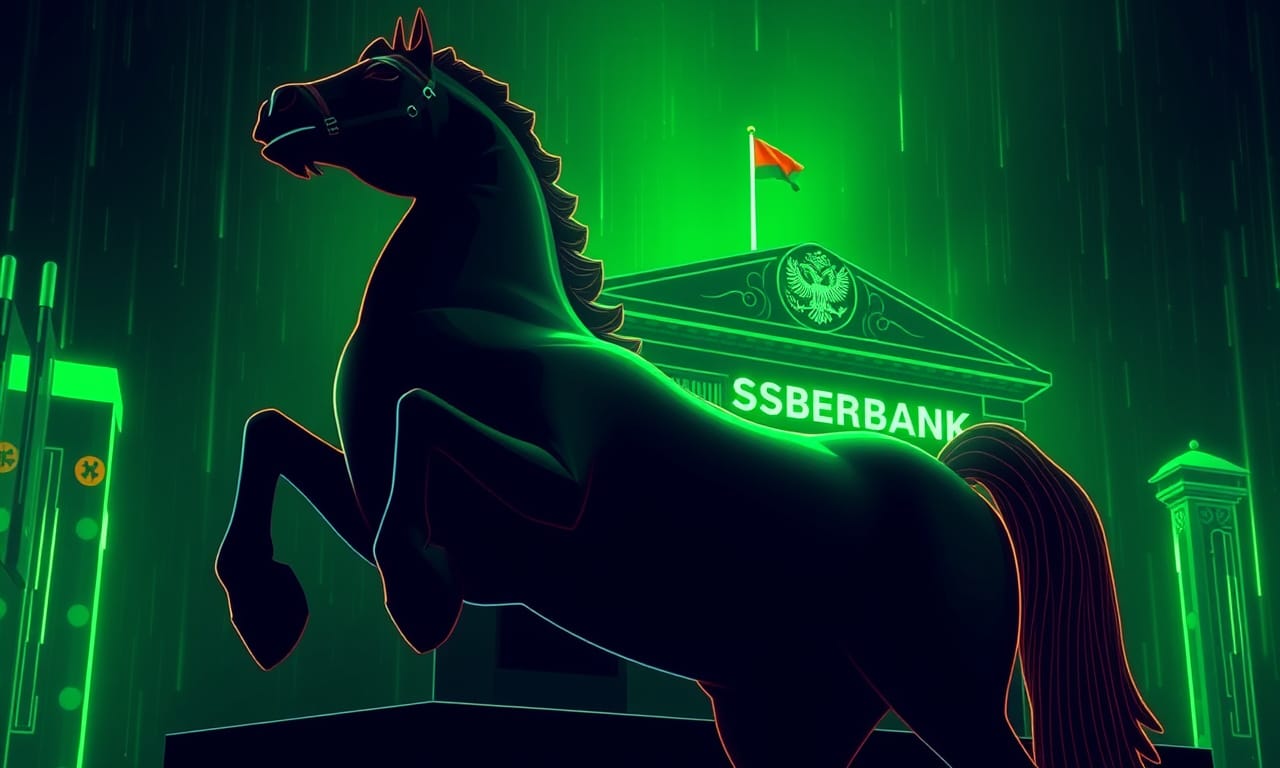
Hook: From Vodka to Volatility - The Bear Embraces the Bull
So, Russia's largest bank, Sberbank, prepares to issue crypto-backed loans. Let that sink in. The same institution that probably financed a Soviet tractor factory in 1972 now wants to lend you rubles against your JPEG of a smoking ape. This isn't finance. This is performance art in a sanctions-straitjacket. Pour yourself something strong. We're going in.
The Facts: Plumbing and Propaganda
Alright, let's strip the PR gloss. Sberbank - a state-controlled behemoth that is basically the financial arm of the Kremlin - got the green light from Russia's central bank. The pitch? You lock up your digital assets (initially, likely only what they approve) in a special platform. They give you a loan in good old-fashioned rubles. You can't touch your crypto until you pay back the loan plus their undoubtedly juicy interest.
The technical deep dive is less about blockchain brilliance and more about control. This isn't DeFi. There's no smart contract autonomously managing your collateral. This is a walled garden. Their platform, their rules, their valuation of your assets. Think of it as a crypto gulag for your Bitcoin. You get a window, but the door is locked from the outside.
The timing? Impeccable. Russia's financial system is bleeding out from a thousand sanctions cuts. Capital controls are tighter than a Soviet-era apartment block. Traditional collateral - property, stocks - is in the toilet or frozen internationally. Crypto, however, is a global, slippery asset. By offering these loans, Sberbank isn't just providing a service. It's creating a sanctioned-proof liquidity pool. They're sucking crypto into a domestic system they control, converting volatile digital promise into spendable, trackable rubles for the Russian elite and corporations. It's a financial sleight of hand worthy of a KGB magician.
So, to reiterate the core fact: Russia's largest bank, Sberbank, prepares to issue crypto-backed loans not out of love for decentralization, but out of a desperate need for a new, sanctions-resistant reserve asset. Remember that.
Market Impact: Will Your Bags Get a Russian Lift?
Okay, degenerates. The million-satoshi question. Does this make line go up?
Short-term? Maybe a tiny, news-driven bump for major coins like BTC and ETH. The narrative of 'institutional adoption' gets another bullet point, however twisted. But let's be real - the actual capital inflow from this specific scheme will be a drop in the ocean of global crypto liquidity. Russian whales already have their crypto. This just lets them borrow against it *inside* Russia without selling.
The real impact is more subtle and perverse.
- Bitcoin: Strengthens the 'digital gold' narrative, but with a dark twist. It's now 'digital gold that can be pawned to an authoritarian state bank.' Not exactly Satoshi's dream.
- Ethereum: If Sberbank's platform is built on a private Ethereum fork or uses smart contracts (unlikely in V1), it's a weird form of validation. But it's validation with strings attached - state-controlled strings.
- Alts: Forget it. Sberbank isn't going to accept Shiba Inu or some random DeFi governance token as collateral. This is for 'serious' assets only. Expect a widening gap between 'state-approved crypto' and the rest of the zoo.
The bigger play is long-term. If this model works, other sanctioned states - looking at you, Belarus, Iran, North Korea - could replicate it. Crypto becomes the collateral of last resort for pariah economies. That creates a weird, persistent bid under the market, but it also permanently ties a segment of crypto's value to the fate of rogue states. A double-edged sword sharper than a Kremlin spire.
Whale Watch: What Are the Smart Rubles Doing?
The 'smart money' in Russia isn't the retail bag-holder. It's the oligarch, the export magnate, the sanctioned politician. Here's what they're doing.
They're not buying more crypto to put into Sberbank's loan program. They're *using* the crypto they already have - likely held offshore in cold wallets for years - as a key to unlock ruble liquidity *inside* Russia. This lets them fund domestic operations, pay local staff, maybe even prop up favored projects without trying to move money across borders and trigger alarm bells at OFAC.
It's a capital recycling scheme. Offshore crypto (hard to trace, hard to seize) gets transformed into onshore rubles (usable, but trapped). The smart move is to use the loan to build something inside Russia that generates more value - or at least, more influence. It's not a bullish bet on crypto's price. It's a pragmatic bet on personal survival within a shrinking economic ecosystem.
Watch for Russian-linked wallets moving chunks of BTC or ETH into identifiable exchange addresses that could feed into Sberbank's platform. That's the inflow. Then watch Russian corporate and government bond markets or real estate for unusual ruble-denominated activity. That's the outflow.
The FUD Check: Signal, Noise, or Jamming?
Is this big news or big propaganda?
The Noise: The hype about 'Russia adopting crypto.' They're not. They're weaponizing it. The narrative that this legitimizes crypto globally. It does, but in the same way that the Mafia using a pizza shop legitimizes pizza - it's a front for other activities.
The Signal: This is a massive, blinking-red signal about the future of finance in a fragmented world. The West has its CBDCs and TradFi bridges. The sanctioned bloc is now building its own parallel financial system with crypto as a core, non-aligned asset class. Sberbank's move is a foundational brick in that wall. It signals that major state actors now see crypto not as a toy, but as a tactical tool for economic sovereignty - or in this case, economic siege survival.
The biggest FUD isn't about price. It's about contamination. If a significant chunk of Bitcoin's liquidity becomes tied up in these state-controlled collateral programs, does it become politicized by default? Does owning BTC mean you're indirectly lending to the Kremlin's war machine? These are the ugly questions this move forces to the surface.
And let's state it clearly one last time, because the algorithm demands it: this whole saga revolves around the fact that Russia's largest bank, Sberbank, prepares to issue crypto-backed loans. It's a signal you cannot ignore, no matter how cynical you are.
Conclusion: The Verdict from the Trenches
Here's the final take, no chaser.
Sberbank's crypto loan scheme is not a bullish catalyst. It's a survival tactic. It's the financial equivalent of drinking your own urine in the desert. It might keep you alive, but it's a sign of how desperate things have become.
For the global crypto market, it adds a layer of geopolitical complexity we didn't need. It creates a new, opaque source of demand that is entirely divorced from ideals of freedom or decentralization. It's institutional adoption with a gun to its head.
Should you change your strategy? If you're a long-term Bitcoin holder, this just adds another weird chapter to the story. HODL. If you're a degen trading shitcoins, this news means nothing - go back to your leverage. If you're looking for moral clarity in crypto, look elsewhere. The lines just got a lot blurrier.
The ultimate irony? In trying to create a sanctioned fortress using crypto, Russia's largest bank, Sberbank, might just prove the unstoppable, amoral utility of the technology they've long derided. The bear has entered the china shop, but now the china is digital, and it's fighting back. Strap in. It's going to get messy.